
We're almost there. The fifth and final soup is upon us. I always make my Cream of Mushroom last. To be honest, it makes a mess out of the bottom of my 30 quart pot and I dread cleaning it at the end of the project. But while I vigorously scrub the darkened roux from the depths of the dish, the back of my shoulders and neck tighten and I know the end is in sight. After days of slicing, chopping, pureeing, cleaning, bottling, and savoring this seasons' soups, I scour and scour until my pot is just as clean as when I started. It is packed away in the basement until next season.
When I first started making these soups, I revelled in the joy of feedback. Ooohhs and aaahhhs warm my heart. And of course, the appreciative comments are still welcome. But sometime, I find the actual process of creating the soups more enjoyable than enjoying them with a salad or sandwich. Isn't that what it's suppose to be about? I mean, it's great that I can make dinner for the long Boston winter months in just one week if I wanted to, but the process of eating a bowl of soup just doesn't compare to the process of making it from scratch. Lord knows, in our home, our dinners are spent in front of the television and in 1o minutes flat, we're done and looking for something sweet. There is no calming, soothing method to that. It's more in building the flavors, changing the textures, and enhancing the final product.
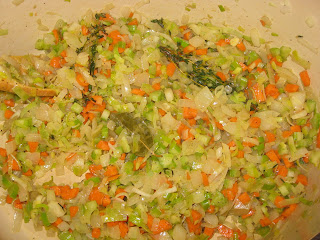
As with many of my other soups in my repetoire, I started sauteing a mirepoix of carrots, onions, celery and also added shallots (about three pounds), two bay leaves and fresh thyme. With this soup, I used unsalted butter instead of oil for my fat of choice. Most cream based soups are based with a roux (an equal combination of fat and flour, used as a thickening agent).
Once the vegetables softened over low-medium heat, I tossed in the flour. I didn't measure, but traditionally it is equal parts by weight). With such a large amount of soup, I could fudge with the consistency later if I needed to. I cooked the roux mix until the flour scent dissappeared, about five minutes. After I tossed in two cases of botton mushrooms and some home-made chicken stock, the soup was brought to a boil and simmered for a few hours. To keep my costs down, I limited myself to buttom mushrooms, which taste delicious in this soup. But to simply raise the sohpistication of the soup, I suggest using portabellos, dired porcinis, creminis, or any combination that you prefer.
About two hours later, I buzzed up the soup with my hand blender, added some fresh parsley, salt, pepper, two quarts of heavy cream and let the soup simmer a little more until the flavors came together. While this soup did do the most damage to my pot, it's rather simple to make. It just takes patience and time.
To serve it, a delicate drizzle of truffle oil will send this over the top. Add that with a quick saute of some fresh mushrooms with garlic and you're set for the night. Taking a spoonful is like slithering into a steaming hot bubble bath. I promise.


 Butternut Squash Soup. Yield: 4-6 Servings

 d parsley. And of course, taste, taste, taste. You may not need a lot of salt if you're using store bought stock, but I'm sure you'll need it from homemade stock.
  I grabbed about ten pounds of plum tomatoes, cut them in half and tossed them with kosher salt, black pepper, sugar, thyme, and oil. Because the tomatoes are out of season, they are solid as a rock and need some sugar to soften and sweeten them. After tossing them on the grill until they released some of their juices and the grates looked sadly speckled with black tomato seeds, I pulled them off and piled them on my sheet pan.


 Posts
Posts


